
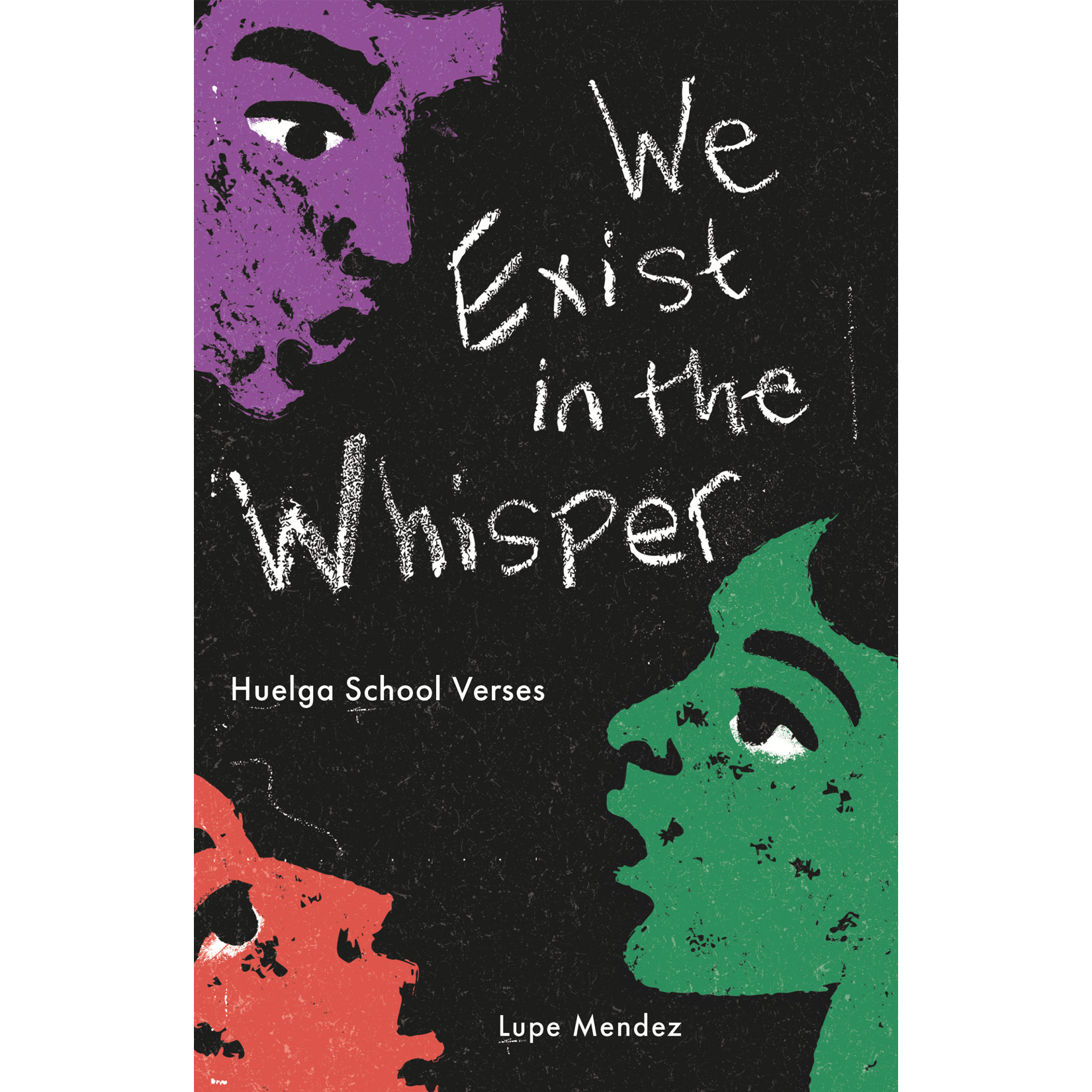
We Exist in the Whisper: Huelga School Verses
$17.95
The Mexican community’s school boycott in 1970s Houston is revealed in this provocative anthropoetry collection.
by Lupe Mendez
ISBN: 979-8-89375-030-0
Publication Date: March 31, 2026
Format: Trade Paperback
Pages: 156
Available
“One day all these classrooms / will no longer hold any of us. / Leave no evidence we were here. / We exist in the whisper…” Lupe Mendez’s innovative new collection captures a unique time in Houston, Texas, “a sliver of a moment for Mexican-American and Mexican communities in the early 1970s,” that explores Houston ISD’s racist plan to integrate schools by sending Mexican-American children—labeled as white—to predominantly African-American schools, thereby satisfying federal desegregation laws.
Incensed that its children would have to travel to schools that were no better than the ones they could walk to, the Chicano community resisted by instituting a walkout, or huelga, and creating its own schools in churches, homes and neighborhood centers. Weaving poetry and history, the book contains “found” poems created from newspaper articles about the strike; oral history interviews with teachers, principals and students; notes from visits the author made to the sites where classes were held more than 50 years ago; docupoems created from official Huelga School papers; and historical documents such as photographs, charts, fliers and letters.
In his illuminating notes about the book, Mendez describes the methodology for creating this collection and includes a list of best practices for the “poethnographer.” His research revealed the racism that existed in this era, perpetuated by the majority white population and between brown and black populations forced to compete for every resource. Ultimately, Mendez asserts the Huelga School strike had a critical impact on Houston, both in the development of Mexican-American leaders who got their start in these “freedom schools” and the nascent collaborations between diverse communities. This creative, thought-provoking volume is a must-read for anyone interested in education, history and Mexican Americans’ fight for equality.
Related products
-

Assistance to Compensate for Loss of Federal Funding
Price range: $100.00 through $3,000.00 Select options This product has multiple variants. The options may be chosen on the product pageAvailable


